Operations·April 8, 2026·13 min read·Andre Alves
How we priced Rocket's first 100 jobs (and what changed)

Pricing is the part of the contractor business that nobody writes honestly about. The trade publications publish surveys with averages that are five years out of date. The consultants tell you to 'know your numbers' without ever showing what their own numbers look like. The agencies pretend pricing is downstream of marketing, when in reality marketing without pricing discipline produces volume at a loss.
When Dr. Kebar and I launched Rocket Garage Door Services in Polk County in 2023, we made every classic pricing mistake in the first 100 jobs. We undercharged. We discounted to close. We avoided giving prices over the phone because we were afraid of losing leads. We gave free estimates that were not actually free because we were absorbing the truck cost. By the time we hit job 100, we had a clear data set of what was working financially and what was not, and we rebuilt pricing from scratch.
This post is the unredacted version of that journey. Real ranges, real mistakes, real lessons. The numbers below are the actual numbers from Rocket's first year of operation in Central Florida, not industry averages. Your market may be different, but the lessons translate to any contractor trade where the work is partly commodity and partly trust.
I am writing this in first person because I lived these decisions personally as the owner-operator of Rocket. The data is from our internal job log. The conclusions are from many late-night conversations between me and Dr. Kebar about why we were leaving money on the table.

Day one: the pricing we copied from competitors
On day one of Rocket, we did what every newcomer does. I called 12 competitors as a customer, asked for quotes on the same set of jobs (spring replacement, opener install, full door replacement), and built a price sheet that sat about 5% below the median quote I received. The logic was that we were unknown and needed to win on price until reviews accumulated. The logic was wrong, and it took us 30 jobs to find out why.
The first month produced a high close rate, around 70% of estimates booked. We thought we were winning. The phones were ringing, the trucks were busy, and the customers were happy because they were getting fair work at a fair price. Revenue was tracking ahead of plan. I remember telling Dr. Kebar in week three that we were going to hit our year-one target by month four if the pace held.
What I did not realize at the time was that we were buying revenue. The high close rate was hiding the fact that several entire job categories were break-even or worse once true costs were included. We were running ourselves exhausted to deliver volume that was not producing the margin we needed to reinvest in marketing, equipment, or a second crew. The dashboard looked good. The bank account did not match the dashboard.

Job 30: the margin reality check
I pulled the job log at job 30 and built a spreadsheet that tracked true margin per job, including truck cost (fuel, insurance, depreciation, maintenance prorated per call), labor at a real loaded rate, parts at actual supplier cost rather than retail, callbacks within 30 days, and warranty exposure modeled as a 6% reserve. The bill-of-goods analysis took me a weekend and changed how I thought about every quote I had ever written.
Average margin was much lower than projected because we had not priced in callbacks and warranty work. Roughly 14% of jobs in the first 30 generated some kind of callback within 30 days, and each callback consumed an average of 1.6 hours of crew time including drive. That is real money. Nobody had told me to model it, and the trade publications I had read at startup time said callbacks should be assumed at under 5%. The reality at scale and at speed is closer to 12 to 18% for a new business that is still learning the local conditions.
The breakdown by category was eye-opening. Spring replacement jobs were genuinely profitable, around 38% net margin after honest cost loading. Opener installations were break-even, around 4% net margin. Full-door replacements with custom orders were quietly losing money, with several jobs running negative once warranty reserves were included. We had been celebrating the door replacements because they had the highest sticker price. The sticker price had nothing to do with whether they made us money.

The discount habit
The second pattern that surfaced from the job 30 review was a discount habit I had developed without noticing. Whenever a customer hesitated, I would drop price by 10 to 15% to close the job. By job 30, this was happening on roughly 40% of estimates, and the average discount was 12.4% of the original quote. That is a massive amount of margin to give away on a habit.
I started tracking which discounts actually converted versus which discounts just trained customers to negotiate. The data was clear: discounts converted only marginally better than holding price. Customers who pushed back were going to buy anyway in the majority of cases, and the customers who walked were not price sensitive, they were trust sensitive. Discounting was solving the wrong problem.
There is a deeper pattern here that took me longer to see. Customers who get discounts in week one tell their neighbors that you discounted. Their neighbors call you and ask for the same discount. Within three months, you have trained an entire neighborhood to expect 12% off your quoted price, and your reputation is as the cheap option, which is not where any contractor wants to live long term.
The free estimate trap
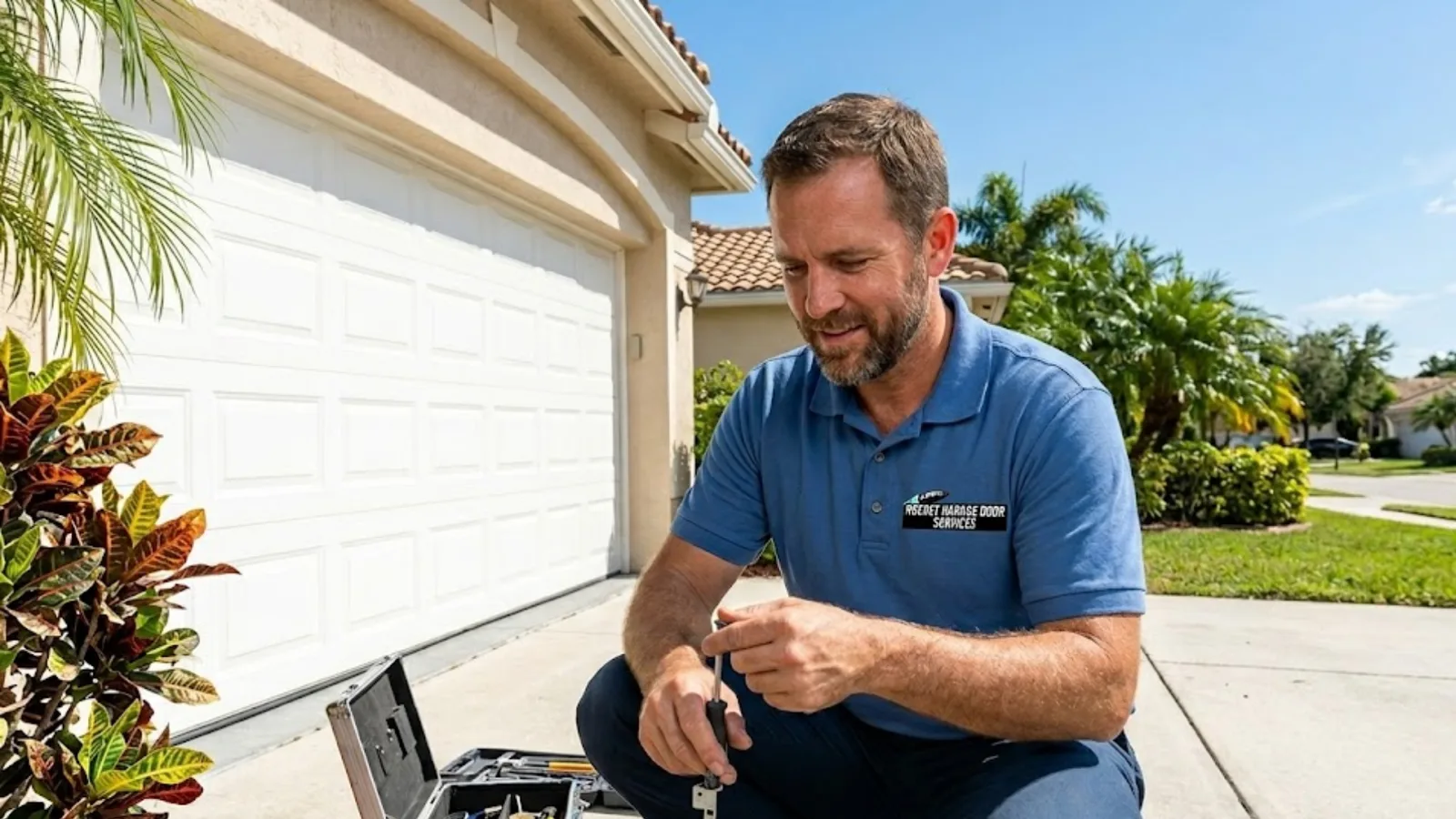
I had been giving free in-home estimates because that is what every competitor advertised. After 60 jobs of doing this, I added up the math. Each in-home estimate cost us about $40 in truck time, fuel, and absorbed labor, regardless of whether it closed. Close rate on in-home estimates was about 55%. The math meant that every 100 free estimates was costing us $1,800 in absorbed cost, and the estimates that did not close were a pure loss.
I had refused to give phone quotes because of the agency wisdom that you 'always close in person.' That wisdom is wrong for garage doors. Most of the work is commodity enough that an experienced tech can quote within 10% accuracy by phone with three questions: door size, current symptom, year of original installation. Once I started running phone quotes for spring replacements and standard opener installs, close rate on those jobs jumped to 71% because we were qualifying out the customers who were never going to buy anyway.
The free in-home estimate became reserved for full-door replacements and custom work, where a phone quote really cannot be accurate and the customer needs to see a sample. For those jobs, we charge a $79 measurement fee that is credited back if the customer books. Showing up free for $5,000 jobs is fine. Showing up free for $189 jobs is not.

The rebuild at job 75
By job 75, we had enough data to rebuild pricing from scratch. We made three changes simultaneously, on the same Monday, with no fanfare. The changes were: phone quotes for spring replacements, opener installs, and standard repairs (in-home only for full-door replacements and custom work); strict hold-price discipline with optional add-ons replacing negotiated discounts; and a repricing of opener installations up by 18% and full-door replacements up by 22% to reflect true loaded margin.
I expected close rate to drop. It dropped from 70% to 62%. I expected revenue per job to rise modestly. It rose 24%. I expected net margin per job to improve. It nearly doubled. The math worked out the way the spreadsheet had predicted, which was the first time in my life a pricing model on paper had translated cleanly to a pricing model in the field.
There was a transition month where the team was nervous and a few longtime customers complained about the price increase. We held firm. By month two, the complaints had stopped, the quality of incoming leads had improved (price-sensitive shoppers self-selected out), and the close rate stabilized at the new level. The crews were less exhausted because we were doing fewer break-even jobs. Everything got better, including morale, because the business was finally producing the margin it needed to fund the next phase of growth.
What we learned about pricing and marketing
Lower close rate at higher margin beats higher close rate at break-even, every time. The lead is not the product. The closed, profitable job is the product. Most contractor agencies optimize for lead volume because lead volume is the metric they can show in a dashboard. Margin is the metric that pays the bills.
Marketing that drives volume to a poorly priced offer is destroying value. Most contractors think they have a marketing problem when they actually have a pricing problem upstream. Spending more on ads to drive more leads to a break-even job is a great way to scale a loss. We see this in discovery calls all the time, and the first thing we do for a new client is look at the job log before we look at the ad accounts.
Pricing discipline is itself a marketing asset. Customers who buy at full price refer other full-price customers. Customers who negotiate refer other negotiators. The customer base you build in your first six months shapes the customer base you have in year three, and discount habits compound just as fast as discipline does.
The phone quote experiment taught us that the pre-call qualification step is itself a marketing channel. The questions a tech asks on the phone shape the customer's expectations of the brand more than any ad ever will. Three sharp diagnostic questions in 90 seconds tells the customer you are the expert in the relationship, and that framing carries through the rest of the job.
Takeaway
Rocket's pricing today bears little resemblance to the pricing we launched with. Almost everything we changed was downstream of looking honestly at the job log instead of trusting industry averages. If you have not pulled your own numbers in the last 90 days, that is the highest leverage thing you can do this month, and it costs you nothing but a weekend.
If you are running a contractor business and you want a marketing partner that will not run more volume into a broken pricing model, book a discovery call. We will look at your job log before we look at your ad accounts. The Rocket case study walks through the rest of the playbook, and our Local SEO and Google Ads engagements are built around the assumption that pricing has to be solved before scale.
Work with Reimagine
Ready to build a lead pipeline for your business?
We take one contractor per trade per metro. A 30-minute call with no pressure: we confirm territory availability and fit, then you decide.
Most metros in Florida still have open slots.
Book a Discovery CallWritten by
Andre Alves
Co-Founder, Reimagine Digital Marketing · Owner-Operator, Rocket Garage Door Services
Keep reading