Founder·April 12, 2026·11 min read·Andre Alves
How we interview contractors before we agree to take them as clients

Most marketing agencies sell seats to anyone who can pay the invoice. Reimagine cannot. Our territory exclusivity model means that every client we accept permanently locks an entire metro and trade for as long as that client is active, so a mistake on our side becomes a multi-year problem. If we sign a contractor who turns out to be a bad fit, we cannot just refund their first month and move on. Their slot is taken, their competitors in that metro are still asking to work with us, and we are stuck delivering a result we cannot deliver because the partnership was never going to work in the first place. The only way to avoid that outcome is to interview the contractor carefully before the contract is signed.
I run every discovery call personally. I do not delegate this to a sales development rep, a junior account manager, or a chatbot. It is a 30 to 45 minute conversation and it is the single most important step in the entire engagement. By the time a discovery call ends, I have a clear yes or no answer about whether to move forward, and the contractor on the other end has the same clarity about whether we are the right partner for them. About 40 percent of the discovery calls I take end with me politely declining the engagement. Sometimes the contractor is disappointed. Sometimes the contractor is relieved. Either way, the honesty saves both sides months of friction.
This post is the playbook I run in my head during every discovery call, written out for the first time. If you are a contractor considering Reimagine, reading this ahead of your own call will save us both time and help you decide whether the partnership makes sense before you pick up the phone. If you are another marketing agency and you want to steal this framework, you are welcome to, but you will need to adapt it to your own exclusivity model because the whole structure assumes that every client decision is locked in for the long haul.

Why the filter exists at all
Reimagine takes one contractor per trade per metro. Polk County garage doors, for example, is now a permanently closed slot because we run it through our own Rocket Garage Door Services. Hernando County roofing is a closed slot because we represent a family-owned Brooksville roofer. Orlando pavers-fence-and-turf is a closed slot because we represent the Orlando contractor who bundles those three services into a single offer. Every slot we close takes that trade in that metro out of circulation for every other contractor in the same territory. The math of the business is that we are trading depth for breadth, and depth only works if we pick the right partners.
That trade-off creates an asymmetric cost of mistakes. Saying no to a contractor who would have been a good client costs us a single engagement fee. Saying yes to a contractor who turns out to be a bad fit costs us the entire territory for the duration of that contract, plus the reputation damage of a failed engagement, plus the internal friction of dragging a partnership that was never going to work. The cost of a false positive is dramatically higher than the cost of a false negative, so the filter has to be set to reject aggressively.
This is the opposite of how most marketing agencies operate. The typical agency wants to fill every slot they can because their revenue scales with client count and their cost structure is mostly labor that they can reassign. Reimagine does not scale with client count. We cap our roster deliberately. Every client we accept reduces our available capacity by a non-trivial percentage. The selection process reflects that reality.

The discovery call format
The discovery call is 30 to 45 minutes on Google Meet or Zoom, with video on. I insist on video because most of what I am evaluating is not in the answers themselves but in how the contractor talks about their business. Tone, pacing, willingness to answer hard questions, the moments of hesitation that tell me a topic is sensitive. None of that comes through on an audio-only call.
I open the call by explaining the structure in the first two minutes. I tell the contractor that the call has three parts: they tell me about their business and what they are trying to solve, I ask a specific set of questions I run on every discovery call, and then we decide together whether the partnership makes sense. I tell them there is no pitch deck coming at the end. I tell them I will give them a direct yes or no answer by the end of the call, and if the answer is no I will explain why. Setting this expectation up front changes the dynamic of the conversation. Most contractors relax because they realize they are not about to get pressured into a decision. A few contractors tense up because they wanted a pressure-free conversation that would let them stall, and realize that is not what this is.
I take notes during the call in a shared Google Doc that the contractor can see on screen if they ask. I do not record audio. I do not run any AI transcription. If the contractor wants a written summary I write it myself after the call and email it. The low-tech approach is intentional. Contractors in this space are often burned out on agencies that promised sophisticated tooling and delivered nothing, and a 30-minute video call with visible note-taking signals that I am paying attention to them, not to a stack of software.

The ten questions I ask on every call
The questions below are not a script in the sense that I read them verbatim. They are a framework I hold in my head, and I weave them into the conversation based on what the contractor brings up first. Over a 30-minute call, I get answers to all ten, usually in a different order each time.
Question one: tell me about your business in three sentences, pretending I am a homeowner who has never heard of you. This question does two things. It tests whether the contractor can describe their own business clearly without jargon, which is the single strongest predictor of whether the marketing will have something to work with. And it tells me how they think about themselves. Contractors who open with years in business are different from contractors who open with a specific service differentiator. Both can be good clients but they require different messaging approaches.
Question two: how many crews do you currently run, and what is your monthly revenue range? This is the first financial disclosure request. Contractors who cannot or will not answer this are usually hiding something, either from me or from themselves. A contractor who does not know their own revenue range to within a reasonable approximation is not ready to invest in marketing because they cannot measure whether the marketing is working.
Question three: what is your current breakdown of lead sources? How many of your jobs come from Google, how many from referrals, how many from door hangers or physical marketing, how many from direct calls? The answer tells me where the leverage is. A contractor with 90 percent of their work coming from referrals has a different problem than a contractor with 90 percent coming from Google Ads, and the marketing plan for each is completely different.
Question four: what is your rough close rate on inbound leads, and what is your average ticket? This is the second financial disclosure. It tells me whether the bottleneck in the business is lead volume, lead quality, or sales execution. If a contractor has great lead volume but a 20 percent close rate, more marketing will not fix the business. Their problem is sales training, not marketing. I am not going to take money from a contractor whose problem I cannot solve.
Question five: what marketing agencies have you worked with in the past, and what happened? This is the most diagnostic question I ask, and I listen carefully to how the contractor answers. Contractors who take ownership of mistakes in past engagements tend to be good clients. Contractors who blame every previous agency for every previous failure tend to be the problem, and they will blame us too when the inevitable challenges come up.
Question six: what is your typical response time to a new inbound lead during business hours? A contractor whose answer is 'within 15 minutes' is operating a real business. A contractor whose answer is 'sometime the same day usually' is leaking leads. A contractor whose answer is 'we try to call them back within a week' is going to waste every lead we generate for them, and no amount of marketing can overcome that leak.
Question seven: do you currently answer the phone personally, or is there a call handler, or is it a call answering service? This tells me about the experience a homeowner gets when they call the tracking number we will install on their website. Personal owner calls are often the best, professional call answering services can work, and cheap offshore answering services almost always kill conversion rates.
Question eight: what is your license status, your insurance status, and are you bonded where required? This is a green-flag check for restricted trades. A contractor in garage door, locksmith, or emergency HVAC who is not properly licensed and insured cannot pass Google Advanced Verification, which means we cannot unlock Google paid channels for them, which means we cannot deliver the full playbook. If the answer to any of these is no, the conversation has to shift to whether they are willing to get the paperwork in order before we can start.
Question nine: what does a good marketing outcome look like to you, measured in specific numbers? Not 'more leads,' not 'more growth,' but a specific, time-bound, measurable goal. Contractors who have a specific number in mind (40 calls per month, $30,000 in monthly revenue increase, top 3 map rank in Lakeland by end of quarter) are able to define success, which means they will be able to recognize it when it happens. Contractors who only have vague goals will move the goalposts repeatedly during the engagement because they never knew what the goalposts were in the first place.
Question ten: if we agreed to work together and I asked you to take one marketing action this week that I know works but that you do not want to do, would you do it? This question is the coachability check. The honest answer from a good client is 'yes, probably, depending on what it is.' The honest answer from a bad client is 'I would need to think about it' or 'it depends on whether I agree with you.' Contractors who require agreement before they take action are going to be impossible to run a playbook on, because the playbook includes tactics they have not seen work yet and will not believe until they see the numbers.

What a green flag looks like
The contractors I accept share a few common traits, and I have learned to spot them early in the discovery call. The strongest green flag is the combination of financial transparency and operational honesty. A contractor who knows their own numbers (revenue, close rate, average ticket, cost per lead from each channel) and is willing to share them without hesitation is telling me they run a real business and are ready for a real partnership. A contractor who answers every financial question with a specific number, even an approximate one, earns a lot of trust in the first ten minutes.
The second strong green flag is the ability to describe the business in plain language without marketing jargon. I look for contractors who can say 'we replace residential garage doors in Polk County, we specialize in torsion spring repair, we charge $189 for a standard spring kit, and our crew runs out of a shop in Winter Haven' rather than contractors who say 'we are a full-service, customer-focused, family-owned solution provider serving Central Florida with comprehensive garage door solutions.' The first description is operationally real. The second is a LinkedIn profile written by someone who has never actually replaced a spring.
The third green flag is an honest answer about past marketing failures. Contractors who have been burned by agencies before are the majority of the market, and that does not disqualify them. What matters is whether they take any ownership of the failure. A contractor who says 'I hired an agency last year and it did not work, and looking back I think I did not hold them accountable and I did not have the right intake process on my end' is going to be a great client because they have learned something from the experience. A contractor who says 'I hired an agency last year and they were a total scam and I lost 20 grand and they were lying about everything' has learned nothing and will say the same thing about us in 12 months.
The fourth green flag is specific coachability without blind agreement. The best clients push back on specific ideas during the discovery call but accept them after a short explanation. They are not rollovers who agree with everything (rollovers are usually not operators, they are people looking for someone to blame when things do not work out). They are also not stonewalls who refuse any suggestion they did not come up with themselves. They are operators who think about what they are being told, ask why, and update their position when the reasoning makes sense.

What a red flag looks like
Red flags are easier to spot than green flags because they tend to be loud. A contractor who opens the discovery call by asking 'so how much does this cost and can you guarantee me 50 leads in the first month' is usually a fast no. The question reveals that they have skipped directly to the outcome without any interest in the process, and that they are shopping on price and guaranteed volume instead of on fit. Neither of those can be delivered honestly, and if I say yes to the wrong framing I am setting up a failed engagement.
Another red flag is a contractor who cannot name their own revenue range. I have had discovery calls where the answer to 'what is your monthly revenue' was a long silence followed by 'I do not actually know, my accountant handles that.' A contractor who does not know their own numbers is not ready for marketing, full stop. They will not be able to measure whether the marketing is working and they will not have the context to make good decisions about where to invest. I politely end those calls and suggest they talk to their accountant, get a real financial picture together, and come back in six months if they are still interested.
A third red flag is a history of cycling through many agencies without ownership. I ran a call recently with a contractor who had worked with six different agencies in four years, and every single one was, according to him, a scam or incompetent. One failed agency relationship is bad luck. Two is a pattern. Three or more is a tell. The contractor is almost always the problem in those cases, and the pattern is going to continue with Reimagine if we sign them.
A fourth red flag is refusing to answer financial questions. Not 'I do not know the exact number but it is roughly this range,' which is fine. I mean an actual refusal, like 'I would rather not share that information until we have a contract in place.' A contractor who is gate-keeping their own financial data during a discovery call is either lying about their real numbers or has not yet decided whether they trust me enough to tell me the truth. Either way, there is no basis for a partnership. Marketing decisions are impossible without real numbers.
A fifth red flag is an unrealistic timeline. 'I need to see results in the first two weeks because I have payroll to make at the end of the month' is a red flag because it reveals that the contractor is running on fumes and is looking to marketing as a hail mary rather than as a compounding investment. Marketing does not work as an emergency service. If the business needs immediate cash, the right answer is a bridge loan or a factoring arrangement or selling a service bundle at a short-term discount, not a marketing agency.

The specific reasons we have said no
Every no we have said has a reason, and the pattern over the last year is clear enough that I can share the categories. The most common reason is the one above: the contractor cannot share their own financial numbers. Second most common is a history of agency churn with blame-first framing. Third is an unrealistic expectation on timeline or volume. Fourth is a contractor who wants to outsource the decision-making entirely and is not willing to invest the hour per month we need from them to review progress and set direction. Fifth is a license or insurance gap that cannot be resolved on a reasonable timeline.
A less common but meaningful reason: the contractor is in a trade or metro where we already represent a competitor. When someone calls us asking for marketing for a Polk County garage door company, the answer is an immediate no because Rocket is there. When someone calls us asking for Hernando County roofing, the answer is an immediate no because we represent a roofer there. We explain the exclusivity model, we thank them for considering us, and we decline. About 10 percent of our discovery call declines are for this reason and it is always the easiest call to end because there is nothing personal about the decision.
A rare but notable reason: the contractor has an ethics problem. I have had a small number of discovery calls where the contractor, in the course of describing their business, said something that revealed a practice I did not want to market. Upcharging seniors on emergency repairs. Pressuring homeowners to replace when repair would work. Bait-and-switch pricing from the tracked number on their website to the quote on the front door. These are not my calls to make about the legality of their business, but they are my calls to make about who I want Reimagine to be associated with in a metro where our reputation compounds across every client we represent. I politely pass and move on.
Related Service
Local SEO
Our flagship service. Rank your Google Business Profile in the top 3 and your website on page 1 for every city you serve.
See how it works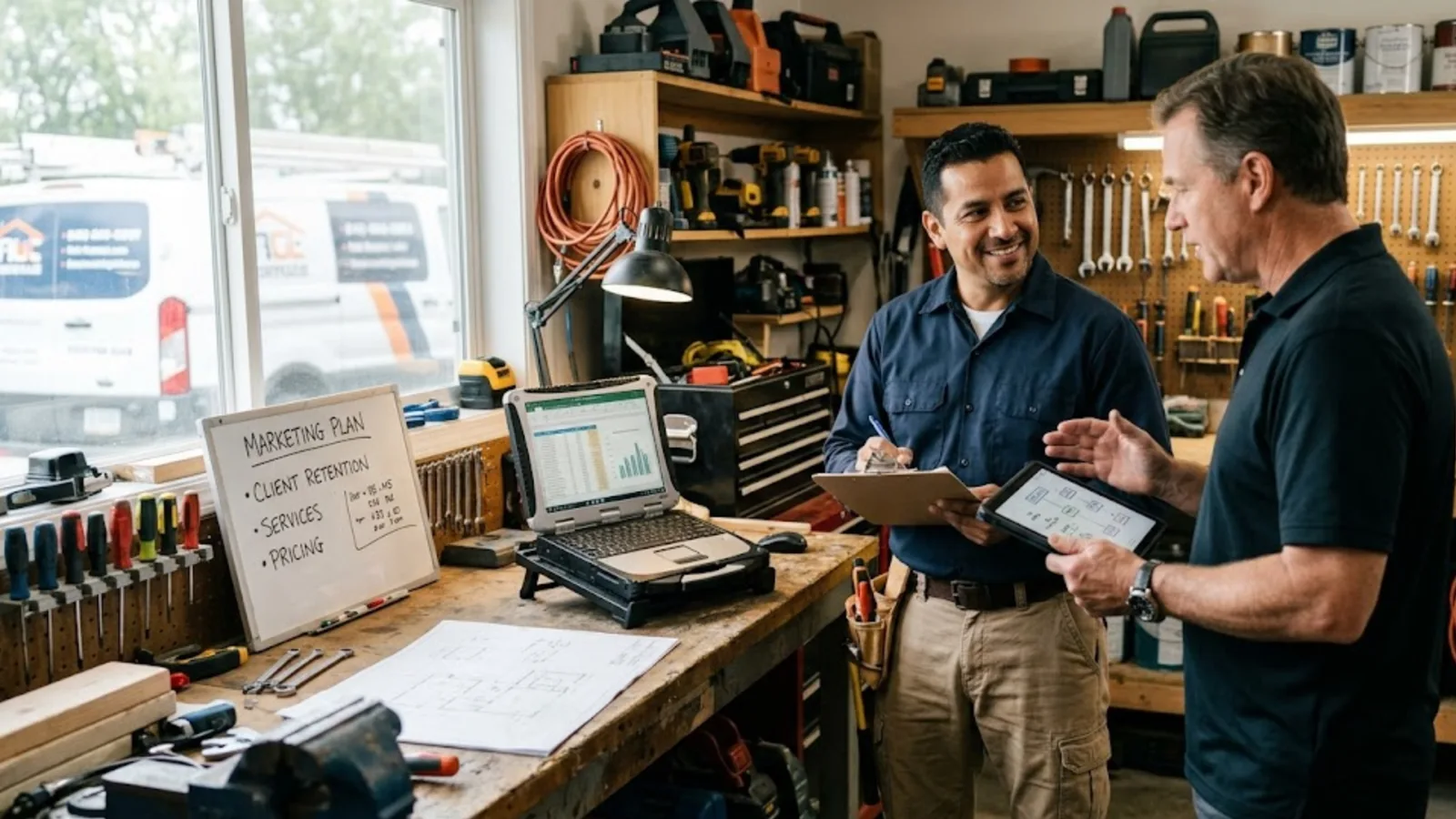
The financial disclosure requirement
Some agencies market themselves as if the contractor does not need to share any numbers to hire them. 'Just tell us your goals and we will handle the rest.' This is a red flag in reverse. Marketing decisions that do not start from real financial data are not decisions, they are guesses. If your agency cannot tell you what your current cost per lead is across each channel, they cannot tell you whether the number they are proposing is an improvement or a regression. They are selling you activity, not outcomes.
At Reimagine we ask for three specific financial data points during the discovery call. Monthly revenue range (approximate is fine). Close rate on inbound leads (approximate is fine). Average ticket size (approximate is fine). From those three numbers I can calculate whether a given marketing spend is realistic for the business, what the break-even cost per lead needs to be, and whether our packages are going to produce positive ROI in the expected timeframe. Without those three numbers, the entire engagement is a guess.
Contractors sometimes push back on the disclosure request. The honest answer I give them is: we do not need exact numbers, we need realistic ranges, and the ranges you give us will be kept confidential within the engagement. We do not publish client numbers, we do not discuss them in case studies unless the client approves, and we do not sell data to anyone. The alternative to disclosure is that we are guessing, and guessing is expensive on your side and on ours.
If the contractor still refuses, we end the call. This is non-negotiable. No financial disclosure, no engagement.

How we talk about territory competitors
Another conversation that comes up on almost every discovery call: what happens if one of your competitors calls us after we sign. The honest answer is that we say no to them, because the slot is locked for the duration of the client's active status. We put this in the contract and we have followed it without exception. Client roster is public at a category level (we list the metros and trades we serve on the Areas We Serve page) so the contractor can verify for themselves that nobody in their trade in their metro is already using us.
Contractors sometimes ask whether we can promise to reject their competitors forever. The honest answer is no, we cannot promise forever. We can promise the slot stays locked for as long as the contractor is an active client. If they pause or cancel, the slot reopens after 30 days and the next qualified contractor in their trade and metro can apply. We give the outgoing client right of first refusal if they want to reactivate before the slot fills, but after 30 days we will not hold the slot empty indefinitely. This policy is transparent, published, and contractual. It is designed to be fair to both the current client and the next one.
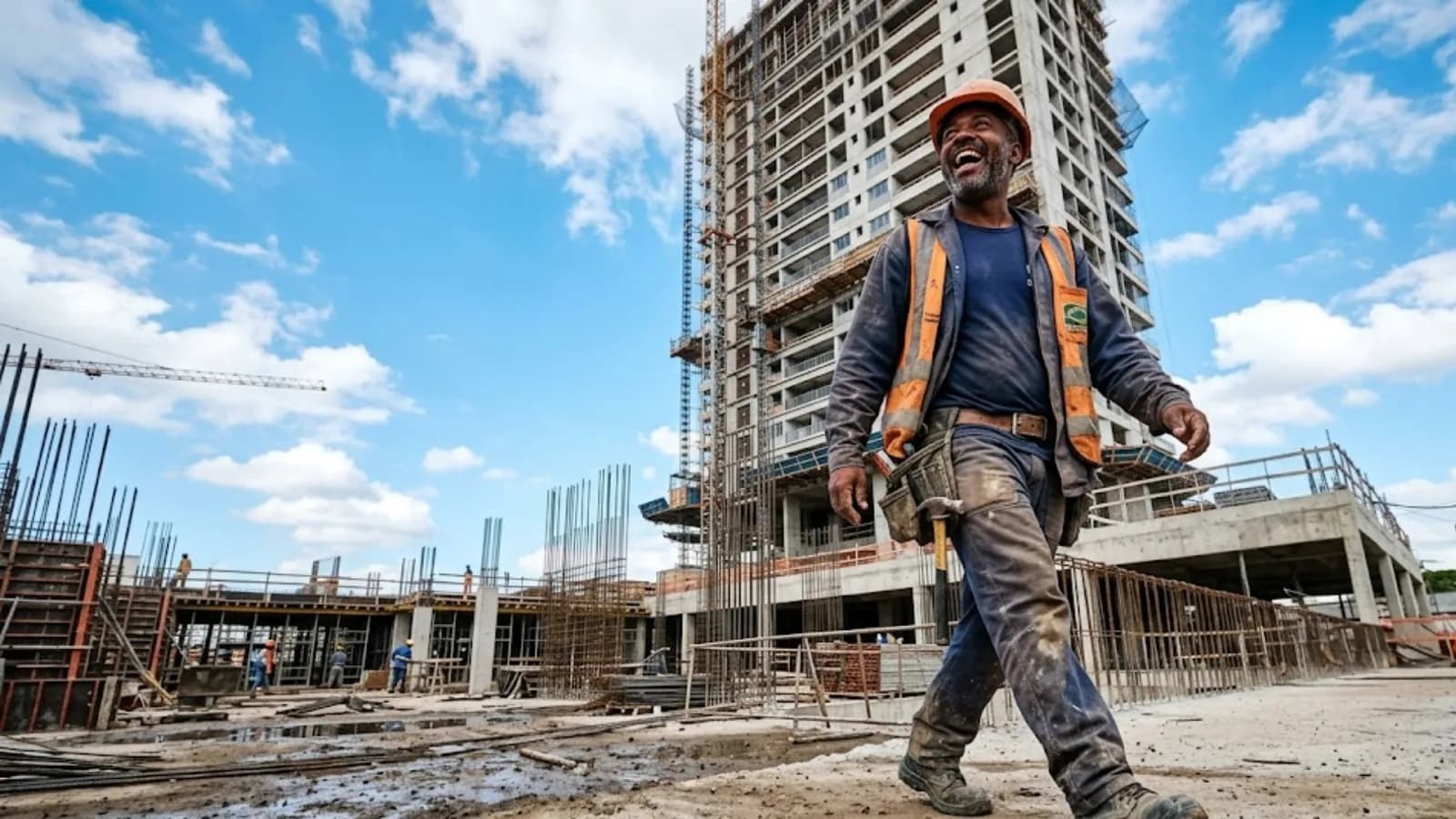
The bill of rights we offer to the contractors we accept
The filter process is rigorous, but the reason it is rigorous is that the partnership on the other side is also rigorous in what it promises. Every Reimagine client gets a short, explicit bill of rights that we stand by in the contract and in practice.
Right to direct access to the founders. Every client has my direct cell phone and Dr. Kebar's email. There are no account managers, no ticketing systems, no call queues. When you need an answer, you reach the people who actually make the decisions.
Right to transparent reporting. Every client has access to a live dashboard showing spend, leads, calls, conversions, and rank tracking, with the underlying data sources open to audit. No vanity metrics, no screenshots of curated charts, no monthly PDFs that mask what is not working.
Right to cancel with 30 days notice after Foundation. No long lock-ins. No cancellation penalties. The only cost if you leave before month twelve is the remaining balance on your custom website, which you keep permanently. If the partnership is not working on your end, you cancel and the territory reopens. We would rather lose a client honestly than keep one through friction.
Right to own everything we build. Every city page, every schema block, every GBP optimization, every piece of content, every ad account is registered to the client and belongs to them forever. When we part ways, you keep every asset. We do not hold marketing hostages.
Right to a plan that matches your actual situation. The playbook is not one-size-fits-all. If the standard Reimagine approach does not fit your trade or your metro, we either adapt the approach or we pass on the engagement honestly. We do not run a plan that does not fit just to keep the revenue.
The summary: how to prepare for a Reimagine discovery call
If you are a contractor considering booking a discovery call with us, the list below is how to come prepared. The more of these you can answer before the call, the faster we can get to a clear yes or no together.
- Monthly revenue range (approximate is fine, no exact number needed)
- Monthly job volume and rough seasonality pattern
- Close rate on inbound leads (approximate)
- Average ticket size by service type if you track it that way
- Current lead source breakdown: what percent from Google, referrals, physical marketing, direct
- Cost per lead on each active marketing channel if you know it
- Business license status and license numbers where applicable
- Insurance and bonding status
- Advanced Verification status if your trade requires it
- List of every marketing agency you have worked with and a one-sentence summary of why each engagement ended
- Current response time on inbound leads during business hours
- Whether calls are answered by the owner, a call handler, or a call service
- Specific measurable goal you want Reimagine to help you achieve (number + timeframe)
- Three biggest competitors in your metro, by name
- Honest self-assessment of whether you have time to spend 1 hour per month reviewing progress with us
- Willingness to take at least one marketing action per month that you might initially disagree with, if the reasoning is explained clearly
- Questions you want to ask us
Takeaway
The filter is strict because the partnership is long. Every contractor we say yes to becomes a multi-year relationship that locks a territory, compounds a reputation, and commits a meaningful share of our internal capacity. Saying yes to the wrong contractor is more expensive than saying no to a dozen right ones, and the math only works if the filter stays honest. The contractors we accept get a partner that is fully invested in their outcome because we cannot spread our attention across a hundred clients. The contractors we decline save themselves months of friction with an agency that was not going to work for them anyway.
If you want to find out whether your contractor business and your metro are a fit, book a discovery call and we will run the process above together. I will give you a direct answer by the end of the call, and if the answer is no I will tell you exactly why and what I would change before you approach another agency. If the answer is yes, we get started on the work the same week.
And if you are a contractor who read this post and thought 'that list of questions feels invasive,' I hear you. It is invasive. The reason I ask all of it is that I need to know the actual state of your business before I can tell you honestly whether we can help. An agency that does not ask is either not paying attention or does not care about the outcome, and neither of those is what you want.
Work with Reimagine
Ready to build a lead pipeline for your business?
We take one contractor per trade per metro. A 30-minute call with no pressure: we confirm territory availability and fit, then you decide.
Most metros in Florida still have open slots.
Book a Discovery CallWritten by
Andre Alves
Co-Founder, Reimagine Digital Marketing · Owner-Operator, Rocket Garage Door Services
Keep reading
More playbooks
Services in this playbook