Guerrilla Marketing·April 11, 2026·14 min read·Andre Alves
The door hanger playbook that kept Rocket alive for two years (Central Florida garage door marketing, the unglamorous way)
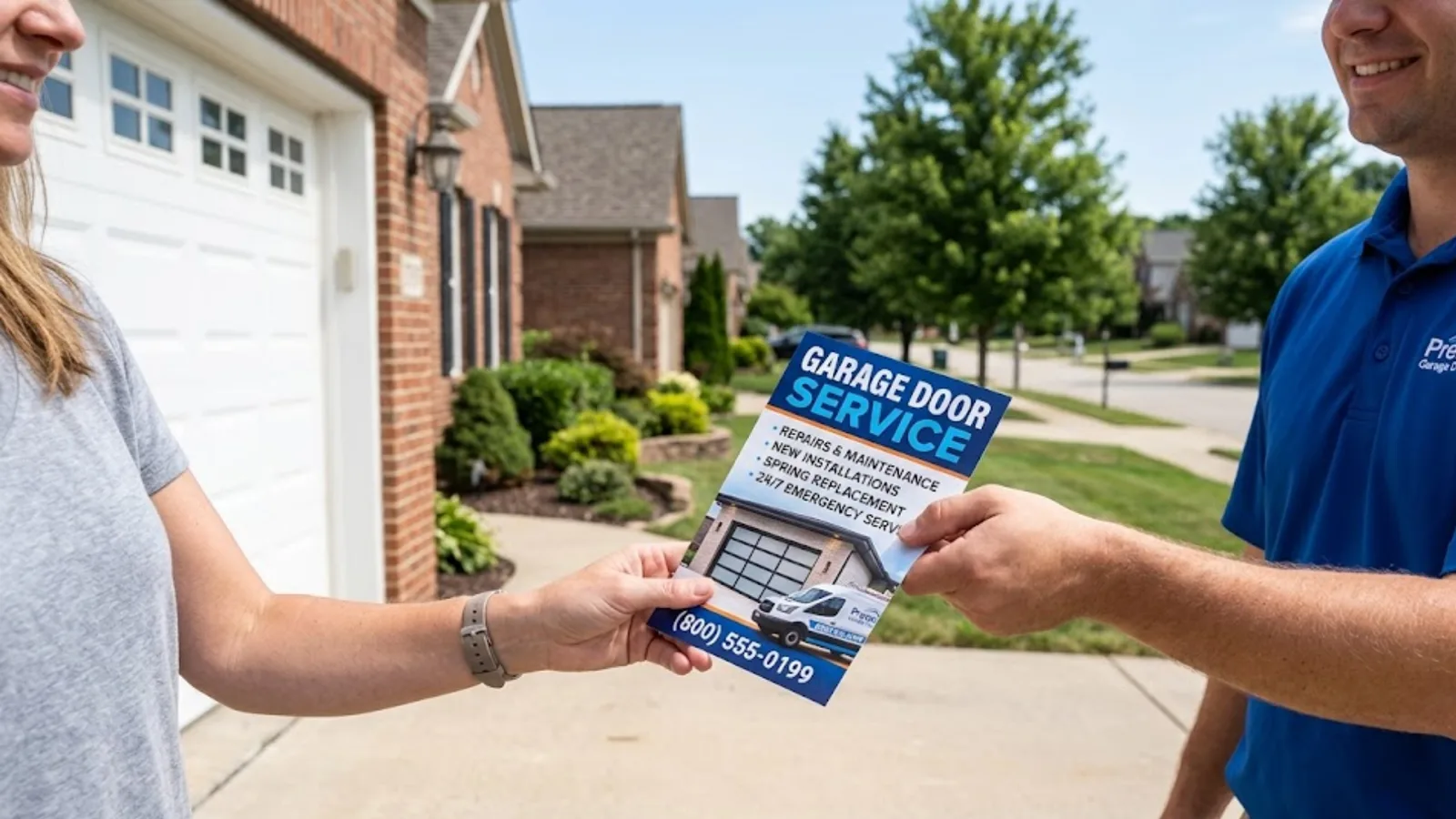
When we launched Rocket Garage Door Services in 2023, the original marketing plan leaned heavily on Google Ads. That plan lasted about six weeks. By month two it was obvious we were stuck behind Google Advanced Verification, which meant zero Google paid traffic for an unknown duration. We had to rebuild the acquisition plan from scratch around channels that did not require Google's permission. The channel that ended up carrying more of the weight than anything else during those two years was printed door hangers walked through targeted residential routes.
Most marketing agencies do not teach door hangers. They cannot be tracked in a dashboard, they cannot be scaled on a spreadsheet, they cannot be white-labeled into a retainer, and they require operational involvement that most agency account managers are not willing to do. So the channel is either dismissed as outdated or handed off to an unvetted distribution service that takes your money and dumps the hangers in a ditch. Neither of those is how door hangers actually work in 2026, and neither of those was what we did at Rocket. We treated door hangers as a first-class acquisition channel and built a real playbook around them.
This post is the entire playbook, from the route selection logic through the printing logistics through the distribution operations through the tracking. Every number and every tactic comes from real Rocket campaigns during our first two years. If you run a contractor business in a restricted trade, or a new business without a marketing budget, or an old business that has lost faith in paid channels, this is a playbook that still works if you take it seriously.
Why door hangers still work in 2026, and why everyone assumes they do not
The assumption most contractors start with is that door hangers are dead. They picture a mailbox stuffed with pizza coupons, a door knob wrapped in flimsy paper, a lawn littered with soggy flyers after a rainstorm, and they conclude that nobody reads them anymore. The assumption is wrong, and the reason it is wrong is interesting.
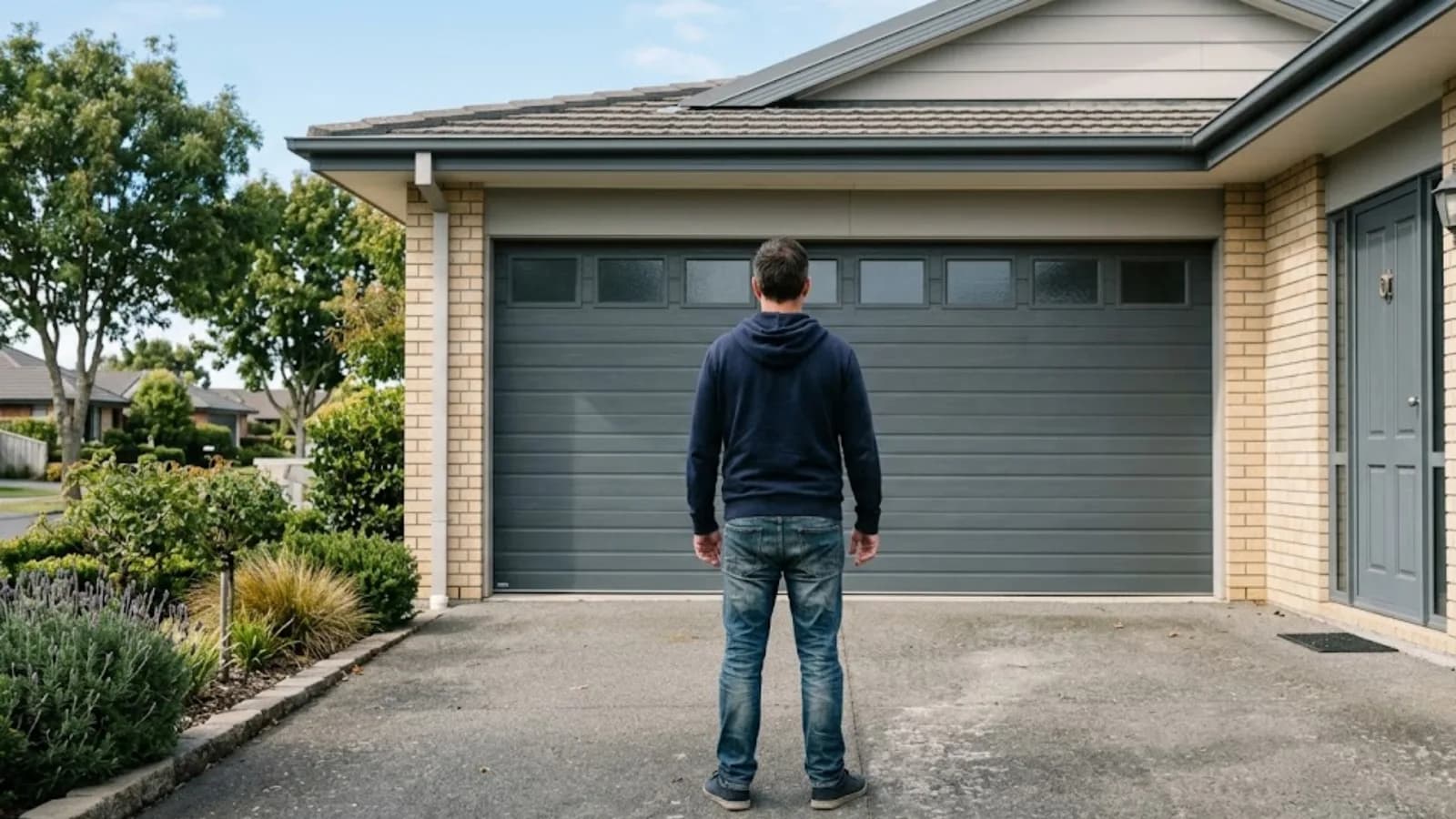
Homeowners do read door hangers, but only in specific conditions. They read them when the hanger is directly relevant to a problem the homeowner already has. A homeowner whose garage door has been making a grinding noise for three weeks, who has been procrastinating on calling a repair company because they do not know who to trust, will read a door hanger from a local garage door repair company. That homeowner will not read a pizza coupon because they already have a pizza plan. The difference is not that people stopped reading physical mail. The difference is that most physical mail is irrelevant to the recipient and relevance is the only thing that matters.
The corollary is that door hanger campaigns fail when the targeting is wrong, not when the medium is outdated. If you drop 10,000 generic garage door hangers across every neighborhood within a 20 mile radius of your shop, you will get a response rate around 0.5 to 1.5 percent and conclude that door hangers do not work. If you drop 2,000 hangers on the specific streets where the garage doors are visibly aging and the homeowners are the right demographic, you will get a response rate closer to 3 to 5 percent and conclude that door hangers are one of the best marketing investments you will ever make. Same medium, completely different math, entirely driven by route selection.
Published industry benchmarks put home services door hanger response rates at 1 to 3 percent for average campaigns and up to 5 percent for well-targeted ones. On our best Rocket routes we hit the upper end of that range consistently because of the route selection method I am about to describe, and the campaigns paid back their print and labor cost within 60 days in most cases.

Route selection: the visible-age trick most marketing books miss
The single most important insight we learned about door hanger marketing is that you can look at a neighborhood and predict whether your service will be needed there in the next 18 months. Every trade has a visible signal that indicates when the thing you service is approaching the end of its useful life. If you can learn to spot that signal from a car window, you can build routes that hit the homes where your phone is about to ring, weeks before the homeowner even picks it up.
For garage doors, the signals are specific and learnable. Paint flaking on the wooden panels of a door built between 1998 and 2010 means the door is approaching the end of its life and a replacement conversation is imminent. Visible rust on the bottom section of a steel door in Florida humidity means the panel is corroding and needs attention. Mismatched door panels (one panel painted a different color from the others) means the original door had a failed section that was repaired cheaply rather than replaced, and the rest of the door is probably on borrowed time. Visible dents in the lower panels suggest the door has been hit by a vehicle or a pet, which stresses the springs and accelerates failure. A door that is visibly out of alignment (one corner lower than the other when closed) means the torsion spring is weakening or a cable is fraying, and the door will fail completely within a few months.
We spent the first month of Rocket driving slowly through neighborhoods in Polk County, taking photos of every street we drove down, and tagging streets by the visible condition of the garage doors. We built a spreadsheet of routes ranked by density of aging doors per block. The highest-density routes became our primary door hanger campaigns. The lowest-density routes were skipped entirely. This one piece of discipline changed our response rate from 1.1 percent on our first blind campaign to 4.8 percent on our first targeted campaign, on identical hanger designs.
Another signal that turned out to be unusually predictive: the age of the neighborhood itself. Homes built between 2005 and 2012 in Polk County had been built with a generation of bottom-tier torsion spring hardware that was failing at unusually high rates by 2023. Entire subdivisions built in that window had multiple failures per year within the same cluster of homes. We mapped those subdivisions and ran recurring door hanger drops on 90-day cadences, because the spring failures were statistically clustered and a homeowner who had not needed us last quarter was more likely to need us this quarter if their neighbor had just called. Pattern recognition on cohort age is one of the highest leverage signals in any contractor business and almost no marketing agency will tell you this.
For other trades, the visible signals are different but the principle is identical. Roofing contractors should look for missing shingles, algae streaks, sagging ridgelines, and visible patches. HVAC contractors should look for outdoor units that are corroded or obviously older than 12 years. Painting contractors should look for fading, chalking, and peeling trim. Landscaping contractors should look for overgrown beds and dying plants. Plumbing contractors should look for rust stains under outdoor hose bibs and water stains on exterior walls. Every trade has its signal. Your job is to learn the signal for your trade and use it to select routes.
The honest numbers: cost, response rate, and real CPA
Door hanger economics are unforgiving but readable. Here are the real numbers from Rocket campaigns during 2024 and 2025, which you can use as a reality check against whatever a printing vendor or distribution service tries to tell you.
Print cost: a basic 4 by 9 inch door hanger printed on 14 point gloss stock runs roughly 10 to 25 cents per unit at order quantities of 1,000 to 5,000. Small quantities (under 500) get expensive fast because of setup fees and short-run economics. Large quantities (10,000 or more) drop to around 7 to 12 cents per unit at the most competitive printers. We sourced our hangers from UPrinting and PSPrint at various times. Turnaround ran 4 to 7 business days from design approval to delivery at our shop. Shipping was $15 to $40 depending on quantity.
Distribution cost: we paid our own people to walk routes, not a third-party distribution service. Our per-hour labor cost loaded (wage plus payroll tax plus a small tool allowance) ran around $22 to $28 per hour. A single walker in a compact neighborhood covers about 100 to 150 hangers per hour once they know the route and have a rhythm. In less dense neighborhoods that drops to 50 to 80 per hour. The math: roughly 15 to 25 cents per hanger in labor cost in compact areas, roughly 25 to 50 cents per hanger in spread out areas.
All in (print plus labor plus modest overhead for design and route planning) our cost per hanger delivered ran 40 to 70 cents. On a campaign of 2,000 hangers with a 3 percent response rate, that is 60 phone calls for roughly $1,000 in total cost, or about $17 per call. Not every call converts to a booked job, but our close rate on inbound emergency repair calls was around 65 percent, which put our cost per booked job around $26. Our average ticket was north of $300 on a spring replacement. The math was positive within the first 10 completed jobs of every campaign.
Third-party distribution services are a different conversation. Reputable ones charge 25 to 50 cents per door delivered, which nearly doubles your all-in cost. Cheap ones charge 10 to 15 cents and some of them dump hangers in trash cans or only cover high-density streets and skip the rest. We tried one of the cheap ones on a 5,000 hanger campaign and got a 0.2 percent response rate, which was well below any published benchmark and screamed that the distribution had been fake. If you use a third party, require GPS tracking of the walker, daily photo logs of completed blocks, and a phone-in verification call to 5 percent of the recipients. Do not trust a service without verification.

Designing a door hanger that actually gets called
Design is the second biggest lever after route selection. A good design on a bad route still fails. A bad design on a good route still fails. The right design on the right route is where the math works. Here is what we learned about what actually gets called.
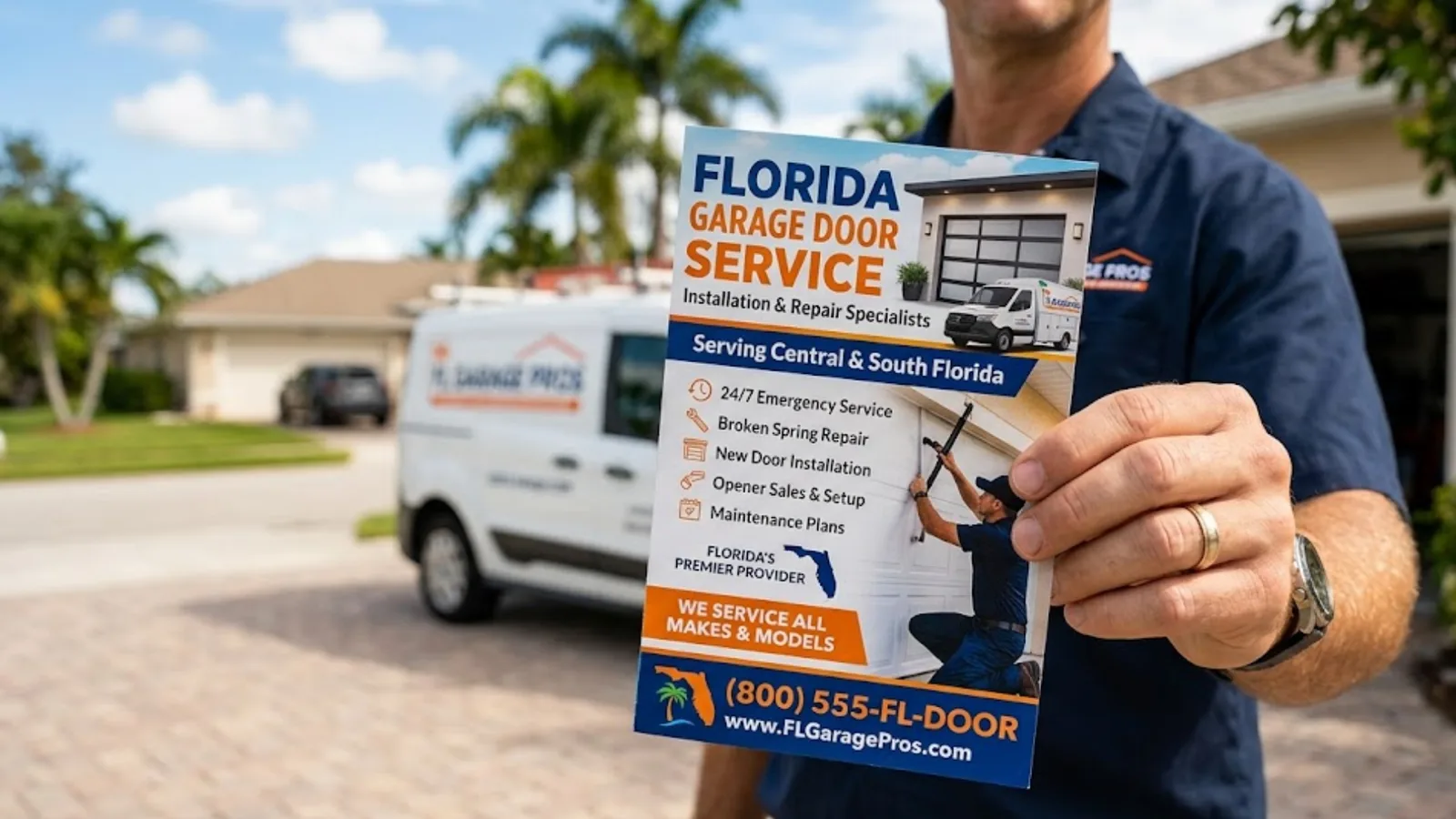
Element one: a specific, named problem that the reader already has. Not a service, a problem. 'Garage door making a grinding noise? We fix that today.' The word 'problem' triggers a mental scan of the reader's life for things that match, and if the problem is close to their experience, the hanger earns another three seconds of attention. Contrast that with 'Garage door repair services. Call today for a free estimate.' The second version is about you. The first is about them. Reader brains route around copy that is about the writer and latch onto copy that is about the reader.
Element two: a trust signal that is not generic. 'Family-owned and operated since 1985' is generic and nobody believes it anymore. 'Same-day service. Florida-licensed (CCC123456). 100 percent five-star Google reviews.' is specific and every phrase is a fact the reader can verify. License numbers, review counts, response time commitments, and warranty terms all carry weight because they are falsifiable claims, not marketing language.
Element three: a low-friction call to action with a tracked phone number. 'Call (863) 269-3543 for a free estimate today.' Not a website URL as the primary CTA because homeowners who are ready to call do not want to open a browser first. Not a QR code as the primary CTA for the same reason. Put the phone number in the biggest typeface on the hanger. Make it impossible to miss. The phone number should be a dedicated line or a tracked number specific to the door hanger campaign so you can measure response.
Element four: a printed visual that reinforces the problem. A photo of a broken spring, a cracked panel, or a misaligned door triggers the pattern-matching brain of a reader who has been ignoring their own garage door for three weeks. The visual does not need to be beautiful. It needs to be recognizable. We have seen door hangers with professional studio photography perform worse than door hangers with phone photos taken by the owner of a real job from that week, because the phone photos looked like something that could actually happen at the reader's own house.
Avoid: more than one call to action, more than three sentences of body copy, any form of coupon that requires the reader to remember a code, any mention of multiple services on the front (keep it one problem per hanger), and QR codes as the primary action (they can be a secondary element at the bottom for reviews or financing, but never the main CTA).

Printing logistics: where to order and how long it takes
Order from a real print broker or a direct-to-consumer online printer with a track record. UPrinting, PSPrint, GotPrint, 48HourPrint, and Printrunner are all reliable for small contractor orders. Avoid random Etsy sellers, avoid Fiverr for print orders (graphic design from Fiverr is fine, actual printing is not), and avoid local printers whose per-unit pricing is often 2 to 3 times higher than online printers at the quantities contractors actually need.
Paper stock: 14 point gloss cover is the standard contractor door hanger stock. Lighter stock (10 point) feels cheap and gets discarded. Heavier stock (16 or 18 point) feels premium but costs significantly more without improving response rate in our testing. 14 point is the sweet spot.
Size: 4 by 9 inches is the standard. Larger sizes are available but most mailboxes and door knobs are not sized for them, and they feel too much like flyers. Stick with 4 by 9.
Finish: matte or gloss are both fine. Matte feels slightly more premium and photographs well. Gloss is slightly more weather resistant in Florida humidity. We used both at different times and did not see a measurable difference in response rate.
Hole placement: the pre-punched hole at the top should fit a standard door knob. Most printers have a template. Use it. If you design a custom hanger with the hole in the wrong place, the entire run ends up useless and you will eat the cost.
Turnaround: plan for 7 to 10 business days from click-approve to delivery at your shop. Most online printers offer rush printing for an extra 15 to 30 percent, which can cut turnaround to 2 to 4 business days. Rush is rarely worth it unless you have a storm or seasonal trigger. Plan ahead instead.

Distribution operations: route planning, pace, and the two-person team rule
Distribution is the part that determines whether a campaign works or fails, and it is the part most contractors underestimate. You cannot just hand a stack of hangers to a teenager and tell them to walk around for a few hours. The distribution requires real operational discipline because every skipped block is a hole in your campaign data and every misplaced hanger is a complaint waiting to happen.
Map the route before the walker leaves. Use Google Maps satellite view to identify the specific blocks in the route and highlight which streets to hit and which to skip (skip dead ends that add distance, skip cul-de-sacs with only 3 or 4 homes, skip any street marked with 'No Soliciting' signs as you approach). Print the route map or load it on the walker's phone.
Two-person teams outperform solo walkers on most routes. One person takes the north side of the street, one takes the south side, and they work in parallel down the block without either of them crossing the street. This roughly doubles the hanger drops per unit of time and makes the walking safer because there is always a second person nearby. For a 100-hanger block, a good two-person team takes about 25 to 35 minutes. A solo walker on the same block takes 45 to 60 minutes because of all the street crossings.
Pace: target 100 to 150 hangers per walker per hour in a compact neighborhood once the rhythm is established. The first hour is always slow because the walker is figuring out the cadence. By hour two they are at pace. Do not schedule more than 4 hours of continuous walking per session because fatigue kills the accuracy of the drops and the walker starts skipping houses to save time.
Timing: the best hours to drop hangers are late afternoon on weekdays (3 pm to 6 pm) because most homeowners are home or arriving home, which means the hanger gets seen within hours instead of sitting for days. Late morning on Saturday (9 am to noon) is also strong because homeowners are home and in weekend chore mode, which is the mindset most likely to address a pending home repair. Avoid early mornings before 9 am (too many homeowners still asleep or on calls), avoid mid-day weekdays (hangers sit unseen for hours), avoid evenings after 8 pm (some HOAs treat late-evening distribution as soliciting), and avoid bad weather (wet hangers get thrown out immediately).
Skip the wrong houses. Do not drop on homes with No Soliciting signs, ever. Do not drop on homes with posted No Trespassing signs. Do not drop on gated community main gates unless you have permission from the HOA. Do not drop on apartment complexes, period. Apartment residents are almost never decision makers on garage door repair and the distribution effort is wasted. Stick to single-family owner-occupied homes with accessible front doors.
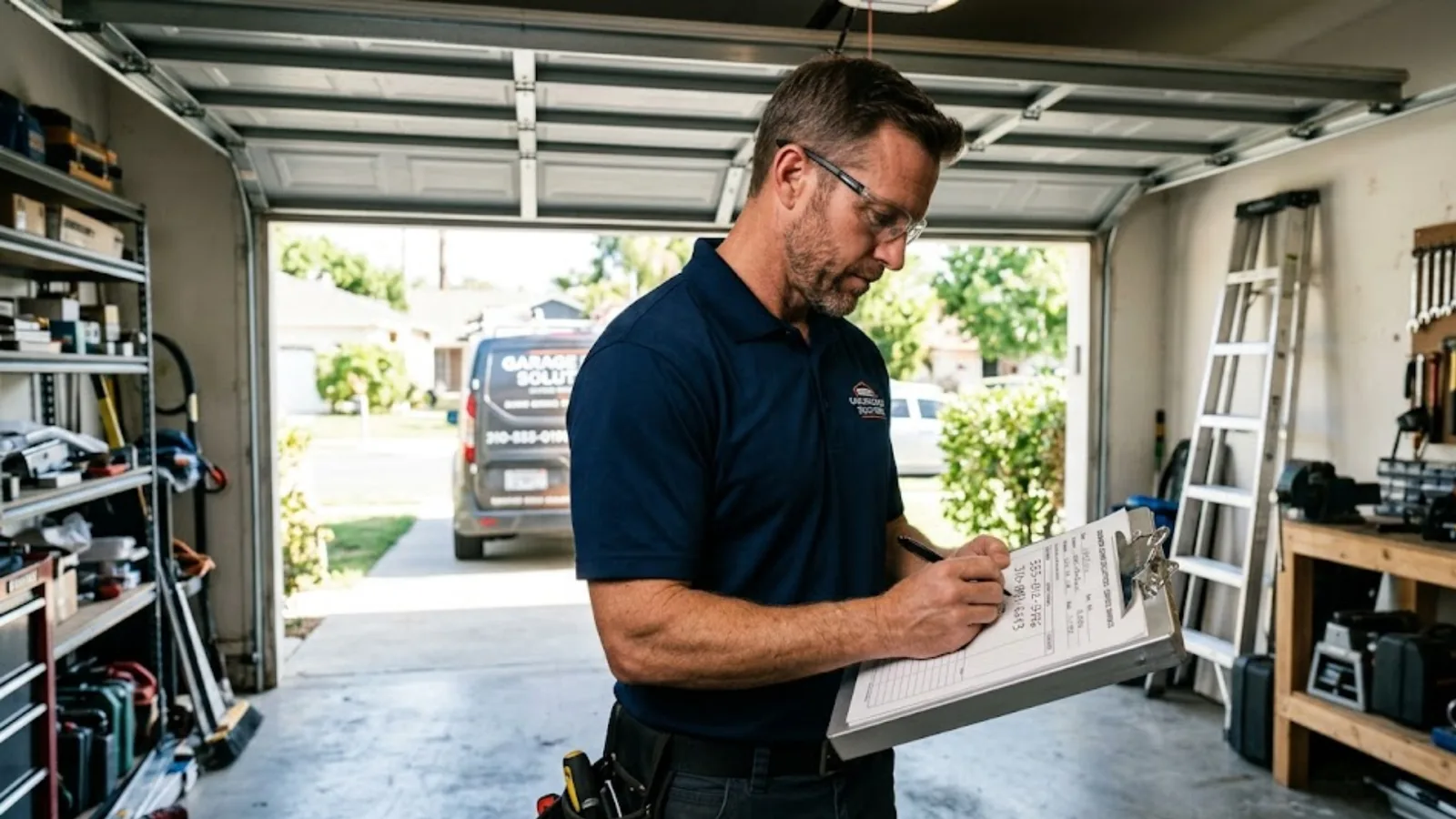
Document everything. Every walker should end the session with a photo log of 5 to 10 completed blocks as proof of work, a count of how many hangers were actually distributed, and any notes on houses skipped or issues encountered. This is how you catch distribution fraud and build a route history that improves over time.
The legal reality: what you can and cannot do
Door hanger distribution is legal in most places in the United States under First Amendment protections, but local ordinances vary wildly and ignoring them can get you fined or, in extreme cases, arrested for trespassing. Here is the practical guidance we followed at Rocket and that we now teach clients.
Federal law does not ban door hangers. The First Amendment protects distribution of printed material to private residences as a form of commercial speech. You do not need a federal permit.
State and county law is where the variation lives. Florida does not have a state-level ban on door hangers for contractor marketing, but individual counties and cities can regulate distribution. Polk County permits distribution without a permit as long as the distributor is not a habitual solicitor and the property owner has not explicitly opted out. Orange County and Orlando both have similar permissive rules. Check your specific city and county ordinance before running a campaign. A 10-minute phone call to the city clerk's office is enough to confirm.
HOAs are a different beast. Homeowners associations cannot supersede the First Amendment in public rights of way, but they can enforce rules on private roads and private common areas inside the HOA boundary. If an HOA has posted signs at the entrance prohibiting distribution, distributing inside is a trespass risk. When in doubt, skip the HOA. The upside of hitting 500 more homes is almost never worth the legal exposure of an HOA dispute.
Individual No Soliciting signs must be respected without exception. A homeowner who has posted a No Soliciting sign has explicitly opted out of any distribution, and distributing anyway can result in a trespass citation. Train every walker to visually scan every door for signs as they approach, and to skip any home with a sign. Put this in the walker training brief and test on it before the first route.
No Trespassing signs are a stronger signal than No Soliciting. A No Trespassing sign means do not set foot on the property at all. Respect it the same way.
Apartment complexes are off limits unless you have written permission from the property manager. Distributing inside an apartment complex without permission is almost always a trespass violation, and many complexes are quick to call the police.
Gated communities are off limits unless you have written permission from the HOA or security. Do not attempt to tailgate through the gate. Do not leave hangers at the guard shack.
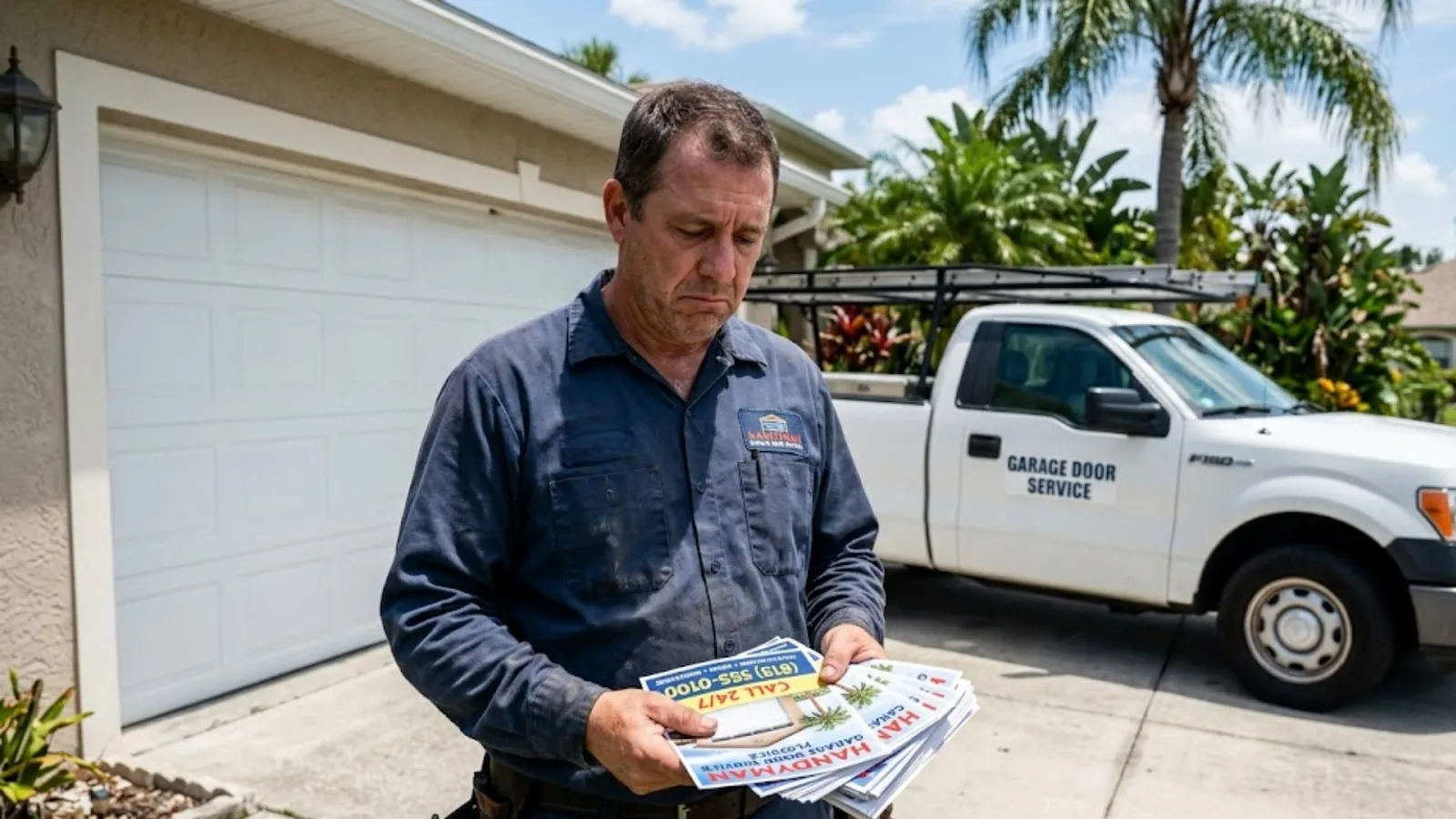
Tracking what works: dedicated phone numbers and campaign logs
If you cannot measure which routes produce which calls, you are operating blind and you will waste money on routes that look promising but do not convert. Tracking is the step that separates operators who treat door hangers as a repeatable channel from operators who treat them as a one-time experiment that felt okay but never scales.
Use a dedicated phone number for every door hanger campaign. Services like CallRail, CallTrackingMetrics, Grasshopper, and Google Voice can provide tracking numbers that forward to your main line. Assign a different tracking number to each campaign (route or neighborhood) so inbound calls are tagged by campaign automatically. We used CallRail for Rocket because it integrated with our CRM and let us attribute each call to the specific campaign that generated it.
Log every call in a spreadsheet with the date, the campaign ID, the route the call came from (inferred from the tracking number), whether it converted to a booked job, and the eventual ticket value. Over time you will see which routes produce calls that book and which produce calls that browse. The routes that produce bookers are the ones you repeat. The routes that produce browsers are either rejected or reworked.
Track by cadence, not just by single drops. Many garage door homes that read a hanger today will not call until their door actually fails 4 to 12 weeks later. If you measure campaign success only by calls in the first 2 weeks, you will undercount the return. We tracked calls for a full 90 days after every drop, attributed by tracking number, and we consistently saw 30 to 50 percent of the eventual call volume come in after week 3.
Repeat cadences matter. Hitting the same route every 90 days produces higher response rates than one-off drops because the second and third drops land on homes where the problem has had more time to become urgent. Rotate your three highest-value routes on a 90 day cycle and track cumulative response over multiple cycles rather than per-drop. The economics look different over 12 months of recurring drops than they do over a single campaign.
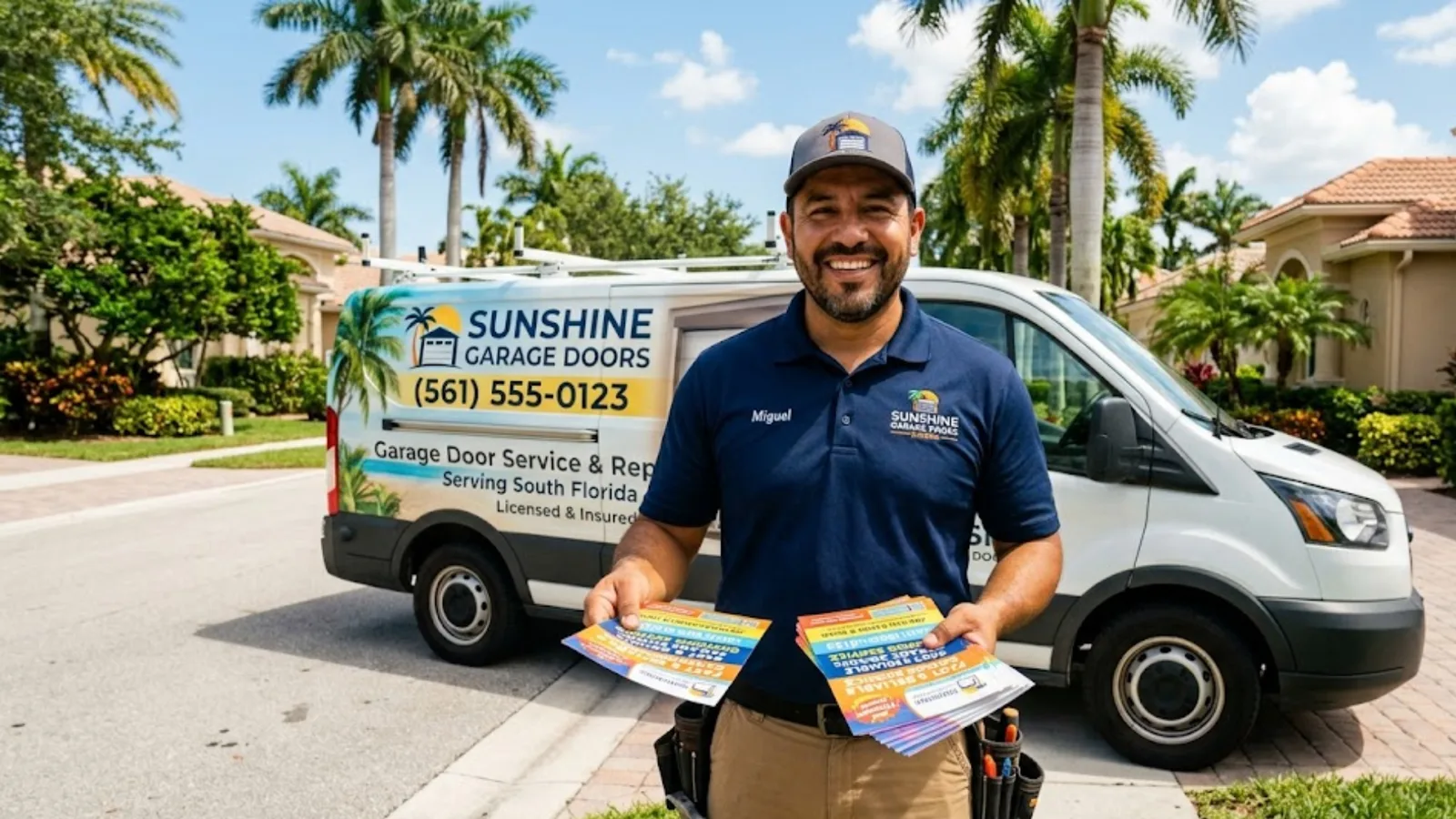
The mistake that kills most door hanger campaigns
The single most common failure pattern in contractor door hanger marketing is branding instead of problem solving. A contractor decides to run door hangers, hires a graphic designer, and ends up with a hanger that has a big logo, a tagline like 'Your Trusted Garage Door Experts,' a list of services, a fancy photo of the shop's truck, and a phone number in small type at the bottom. This hanger is beautiful and worthless.
The hanger is worthless because branding is a long game and door hangers are a short game. A homeowner who has never heard of your business is not going to remember your logo. They might keep the hanger in a junk drawer, but they will never call you because a logo is not a reason to call a stranger. What makes a homeowner call a stranger is a specific problem they recognize in their own house and a clear, low-friction way to solve it. Branding serves neither of those goals on a first-touch basis.
The fix: every single hanger should lead with a problem statement, not a business name. The business name should be present (smaller, somewhere visible) but it should not be the dominant visual. The phone number should be bigger than the business name. The problem statement should be the largest text on the card. And the image should illustrate the problem, not the business.
This is counterintuitive to contractors who have been told their whole career that brand matters. Brand does matter, but it matters after the customer has already met you. On a cold first touch, the job of your marketing is to get the customer to raise their hand and say 'that is me, that is my problem, I need to call someone about this.' Logo-centric design does the opposite. Problem-centric design does the thing you want.
The summary: your door hanger campaign checklist
If you are planning to run your first door hanger campaign, here is the scannable version of the playbook above. Every item is something we did at Rocket during the years we had no other acquisition option, and every item is something we still teach clients today.
- Identify the visible signals of aging in your trade (for garage door: paint flaking, rust, mismatched panels, dents, misalignment)
- Drive target neighborhoods slowly and tag streets by the density of those signals
- Rank routes by signal density and pick the top 3 to 5 to start
- Confirm your city and county do not require a distribution permit (10-minute call to city clerk)
- Order 14 point 4 by 9 inch door hangers from UPrinting, PSPrint, or GotPrint at 1,000 to 2,000 unit quantity for your first test
- Design the hanger with a problem statement as the largest element, a tracked phone number second largest, a specific trust signal (license number, review count, warranty), and a photo that illustrates the problem
- Keep body copy under three sentences and use exactly one call to action
- Skip branding-first design, keep the logo visible but never dominant
- Set up a dedicated tracking number for each route (CallRail, Grasshopper, or Google Voice)
- Plan walker routes ahead of time using satellite view, print or load the map on the walker phone
- Use two-person teams on opposite sides of the street, avoid crossing
- Target 100 to 150 hangers per walker per hour in compact neighborhoods
- Distribute late weekday afternoons (3 to 6 pm) or Saturday mornings (9 am to noon)
- Skip any home with a No Soliciting or No Trespassing sign without exception
- Skip gated communities, apartment complexes, and HOAs without explicit permission
- Require photo logs from walkers at the end of each session as proof of work
- Log every inbound call with date, campaign, route, conversion status, and ticket value
- Track calls for a full 90 days after every drop, not just the first 2 weeks
- Repeat high-performing routes on a 90 day cycle
- Calculate real CPA monthly and cut any route that is more than 2x your target cost
Takeaway
Door hangers are not glamorous and they will never be the story in a case study deck. They are cheap, they are local, they are unscalable in the way that agencies define scale, and they require real people to walk real streets in real weather. But they work. They worked for Rocket through two years of Google purgatory and they still work today on a recurring cadence, alongside the organic SEO and referral channels that have carried the business from day one. Rocket has never run a paid ad and has no plans to start, because the unscalable channels that most agencies dismiss are exactly the ones producing the highest quality leads at the lowest cost. The contractors who dismiss door hangers as old-school are leaving a reliable channel on the table. The contractors who run them correctly treat them as infrastructure.
If you want help setting up a door hanger program for your business, Reimagine bundles door hanger design, route planning, and distribution coordination into our Google Advanced Verification and Local SEO engagements. We are one of the only Central Florida agencies that actually knows how to run this channel because we had to run it on ourselves for two years. Most agencies have never touched it. Book a discovery call if your territory is still open and we will walk you through what a first campaign would look like for your trade and your metro.
And if you are a contractor reading this without hiring anyone, you now have the playbook. Steal it. Use it. Start with your top 3 routes and your first 2,000 hangers. Measure honestly. Iterate. If you still do not believe door hangers can move the needle in 2026, at least run the test once before you dismiss them. Two years of running door hangers as our primary acquisition channel made us very confident in how much they can deliver when the route and the design are right.
Work with Reimagine
Ready to build a lead pipeline for your business?
We take one contractor per trade per metro. A 30-minute call with no pressure: we confirm territory availability and fit, then you decide.
Most metros in Florida still have open slots.
Book a Discovery CallWritten by
Andre Alves
Co-Founder, Reimagine Digital Marketing · Owner-Operator, Rocket Garage Door Services
Keep reading